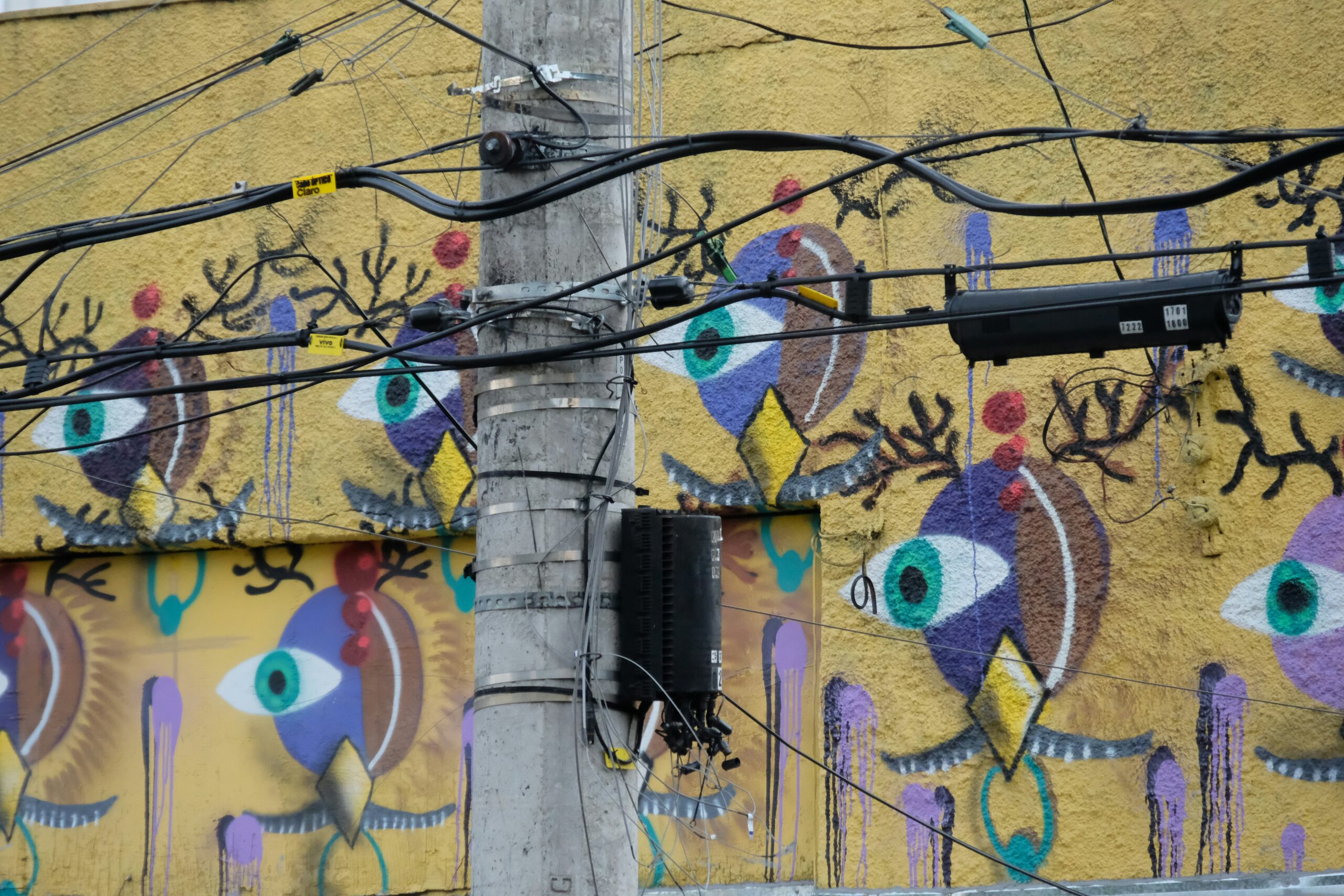
I remember the first time I felt the small tremor of a privacy violation. It was an innocuous experience involving cameras embedded high on the facade of a mall in San Diego.
I told myself it was no big deal: “Just a bunch of cameras…no biggie.”
But the awkwardness stayed. Then I learned that these digital eyeballs were gathering information on mall visitors, and that they may have been a part of a larger surveillance network.
The mere fact that the footprint of our everyday movements was being tracked created a bit of unease for me—unease that turned into a quiet alarm.
In the United States today, a related movement is gaining steam in the form of automated license-plate reader networks (ALPRs). These state-sponsored digital collection tools, such as those built by Flock Safety, represent one of the most significant expansions of mass surveillance capability in our history.
What started as a tactical strategy to locate stolen vehicles has transformed into an infrastructure of continuous tracking of civilian movement. It’s a strategy that’s provoking fear among ordinary Americans, as it signals an intrusion into constitutional privacy and an erosion of self-governance; the creeping of a surveillance state into everyday life.
The Fears of Everyday Americans
Let’s start with the fears—real, profound, sometimes unnamed—that swirl around this issue.
For many Americans, the Fourth Amendment’s guarantee that “the rights of the people to be secure in their persons, houses, papers, and effects, against unreasonable searches and seizures” is a comforting rhetorical anchor. But when cameras and license-plate readers are in scan-and-collect mode, when data are preserved, cross-referenced, and made searchable, the anchor begins to slip.
What might that feel like? Driving to the grocery store and wondering: will this trip live in a database? Picking up one’s children at school and wondering: is someone silently recording how many minutes we stayed, how many times we circled the lot, what route we took? Turning down a side street to avoid traffic and thinking: is this route now part of the mosaic of where I go and when I go?
These are not idle anxieties. They are the fears of intrusion, of exposure, of the loss of the ordinary expectation that American citizens can move through life without someone recording, indexing, analyzing their every turn.
Many of us still cling to the belief that our comings and goings—when and where we drive, whom we visit, how long we stay—are private. But mass ALPR systems challenge that belief.
There is also the chilling effect—the suppressive, subtle retreat of freedom when people know they might be watched. We then start to ponder scenarios like:
Do I avoid that side road?
Do I skip that spontaneous stop?
Do I change my behavior because I believe someone’s eye is on the data-trail I leave behind?
This tension between movement and monitoring strikes at a key component of human flourishing: the ability to act, to choose, to flow freely in daily life, without constant second-guessing or automatic cataloguing.
Then there is the constitutionally grounded worry: if data is retained and searchable, if networked with federal agencies such as immigration enforcement, if pushed into systems like digital “vehicle fingerprints”, then Fourth Amendment protections may become hollow.
What does “unreasonable search” mean when the government can, in effect, watch large swaths of citizen movement without individualized suspicion, without warrant, without oversight? The fear is not of a smoking-gun raid, but of a creeping normalization of observation—of the watchers becoming ambient, the watched always within view.
And finally, the democratic fear: that surveillance is not only about individual privacy, it is about power. Who controls the network? Who has access? What is their purpose? If the infrastructure of monitoring becomes so pervasive that the governed become visible by default to the governors, then the balance of self-governance is threatened. The ability of citizens to act as free, autonomous individuals diminishes if they must always assume they are being seen.
A Perspective from The Art of War
As you may know, I often draw on the wisdom of Sun Tzu’s
The Art of War in my writings. Although written for warfare over two millennia ago, the book’s insights into strategy, deception, awareness, and self-knowledge are powerfully resonant for our moment of surveillance.
Sun Tzu writes: “If you know the enemy and know yourself, you need not fear the result of a hundred battles.” (Book III) This applies not only in war but in life—especially when the “enemy” is systemic surveillance, and the “self” is private individual freedom.
To resist or accommodate, we must first know what we face: the technologies, the infrastructure, the data trails. We must also know ourselves: how much we value privacy, how far we will tolerate exposure, how our movement and associations contribute to our expression of self-governance.
Then there’s this
Art of War passage: “Security against defeat implies defensive tactics; ability to defeat the enemy means taking the offensive.” In other words, simply hiding or withdrawing (defensive) may preserve some safety, but real flourishing often demands proactive strategy.
In a surveillance context, this means that privacy isn’t preserved by passive hope. We need active strategies: advocating for reform, refusing to normalize the surveillance infrastructure, supporting oversight and democratic control.
Sun Tzu also emphasizes deception and surprise: “All warfare is based on deception.” But the wise strategist aims to ensure the enemy cannot surprise them.
In a surveillance age, the “enemy” may be neither a foreign army nor an overt police force, but the ambient architecture of cameras, readers, and data collection that quietly grows. The surprise is that we never asked for it, yet it arrived. So one of our tasks is awareness—spotting how the network expands, how data is used, how policy lags technology—while refusing to be surprised.
In sum, I offer this personal wisdom: treat surveillance not simply as a passive backdrop but as a strategic terrain.
Attend to its patterns. Understand its deployments. Cultivate your own movement-awareness. Raise your voice where oversight is weak. Recognize that privacy isn’t only an individual shelter but part of the terrain of freedom.
The Historical and Comparative Lens: Surveillance in China
To deepen our perspective, it helps to look beyond the U.S. and turn for a moment to the case of China. The surveillance architecture of that country is often cited as the most advanced real-world example of digitized mass monitoring, and it offers a cautionary mirror to what the U.S. may eventually face.
According to many observers, China has deployed a vast network of surveillance cameras (hundreds of millions), facial-recognition systems, biometric databases, integrated data fusion, and social-control mechanisms.
Chinese authorities have linked these systems into “grid management,” neighborhood monitors, “Skynet” camera networks, and real-time citizen-movement tracking. Their aim—at least as publicly stated—is public security, crime prevention, and “stability maintenance.” Yet the magnitude and scope of the architecture raise deep questions about human rights, freedom, and self-governance.
One key element is data fusion: merging biometric, transactional, mobility, identity, social-media, banking, and behavioral data into unified infrastructures. The result is not just surveillance of individual events, but the ability to see and predict patterns of behavior, associations, movement, and dissidence. The logic is: monitor everything, link everything, intervene early. The cost is autonomy.
China’s model is instructive for Americans because it shows where a surveillance society may lead: normalising continuous monitoring, shifting from reactive to proactive control, and eroding the distinction between public and private life.
It brings into focus the question: if every movement, every vehicle, every login, every purchase is tracked and indexed, what remains of privacy? What remains of spontaneous human action? What remains of freedom of association, of dissent, of retreat?
For everyday Americans, acknowledging the China model does not mean saying “we’re the same yet.” But it does mean recognizing that the architecture taking shape here is neither hypothetical nor far away.
The technologies, the network logic, the “vehicle fingerprinting,” the national-lookup sharing are all variants of what authoritarian states already deploy. The U.S. may have stronger legal protections, but the technology is advancing fast, oversight is lagging, and public scrutiny is weakening.
One may ask: why should we care? Because the erosion of privacy is not merely a technical question. It is a moral, constitutional, civic question. If we allow the infrastructure of continuous tracking to become normalized, we risk conceding the field of self-governance to architecture we barely control.
Surveillance, Happiness, Harmony & the Values of Self-Government
Let’s turn now to the heart of what matters: how surveillance affects human flourishing. For many thinkers, happiness, harmony, and prosperity don’t merely come from material wealth or security but from autonomy, community, and the freedom to act, associate, move, think, change one’s mind, and explore. Surveillance intersects every one of those vectors.
When you are aware you might be watched (even if not sure), something shifts inside. The spontaneity of movement shrinks. The side road you once took? You skip it. The unfamiliar café you explored? You hesitate. The public protest you might attend? You pause.
Surveillance reduces the ambient freedom of movement and, in so doing, reduces some of the essential preconditions for flourishing: exploration, spontaneity, community building, quiet solitude. Privacy is not just about keeping secrets. It’s about creating the internal space to think, to reflect, to dissent, to change course.
In the context of self-government, privacy is foundational. Self-governance means that citizens are the authors of their lives, the directors of their movements, the deciders of their associations. When the default becomes “you are visible,” the internal dimension of choice shrinks.
The citizen becomes transparent to the governing apparatus. That transparency can shift the power dynamics: the watcher becomes stronger, the watched becomes weaker. That is not just a technocratic warning; it’s a civic one.
Harmony too depends on privacy. Community and flourishing do not require perpetual visibility. Sometimes the best insights, the best creative leaps, the best relational depths come in unseen moments.
The surveillance in public spaces, the license-plate reader network, the data logs: they shift how we behave in those spaces. Harmony is not just enforced order, but creative freedom within order. When surveillance becomes pervasive, the balance tilts toward control instead of freedom.
And what of prosperity? Economic prosperity in modern society does involve data, analytics, movement, and efficiency. But prosperity also involves trust. If people feel monitored, they may act less freely, which can stifle innovation, entrepreneurship, and risk-taking.
The self-employed may hesitate if every move is tracked. Communities may shrink their public life if the ambient sense of monitoring becomes oppressive. Prosperity in self-governing communities depends not only on infrastructure but on the trust that citizens are free agents.
Thus, the surveillance conversation is not only: “Do I have a right to privacy?” It is: “Does our society permit the conditions necessary for human flourishing, autonomous community, dynamic movement, spontaneous exploration?” We must ask: is the surveillance architecture compatible with the kind of society we want? Or is it gradually shifting us toward a society of visibility instead of liberty?
Bridging to the U.S. Context: ALPRs and the Constitutional Question
Let’s return to the U.S. and the concrete example of ALPR systems. The deployment of automated license-plate readers across American jurisdictions is more than a police tool; it is a structural change in the relation between citizen movement and state visibility.
Historically, license‐plate readers started as mobile systems mounted in patrol cars, used to detect stolen vehicles. Over time, fixed installations (on poles, traffic lights, overpasses) have proliferated. These fixed systems mean that it’s no longer just “if you cross this patrol car” but “if you drive through these zones,” your movement is recorded.
When the cost of the surveillance technology dropped, smaller agencies adopted it more widely, creating what critics call a “curtain of technology” in which it becomes difficult to drive anywhere beyond one’s local area without running into some camera. The effect: movement becomes trackable. Data becomes accumulative.
The company Flock Safety, for example, built a public-private network of cameras and databases. The system captures not only license plates, but “vehicle fingerprints”—color, make, model, condition, bumper stickers. Data is uploaded, searchable, sometimes cross-referenced with federal “hot lists.”
If a state or city shares its network, it may permit federal agencies (immigration, border patrol) to search movements via “back door” access. These developments raise major Fourth Amendment questions.
For decades, we lived under the doctrine that capturing one’s location or movement required a warrant only when surveillance was pervasive or prolonged, or when we had a “reasonable expectation of privacy.” The Supreme Court’s decision in Carpenter v. United States (2018) made clear that acquiring months of cell-site location information required a warrant.
Scholars now argue that ALPR networks, once aggregated and continuous, might generate the same “mosaic” of movement and therefore could trigger similar constitutional protections. The question is: when does a license-plate reader system aggregate the whole of one’s movements rather than one event?
In some cases, U.S. courts have begun to agree. One U.S. federal court in Norfolk, Virginia, ruled that a network of 172 Flock cameras could enable “secretly monitoring and cataloguing the whole of tens of thousands of individuals’ movements over an extended period,” and that a reasonable person could believe that expectation of privacy was violated.
The constitutional architecture built in the 18th and 19th centuries did not foresee cameras on every street, networked and searchable by federal agencies. But our legal traditions did anticipate one fundamental truth: that unlimited state surveillance threatens liberty.
For everyday Americans, the fear is therefore not only theoretical. It is
the system in my town, my car-pool route, school-drop-off, side-street escape, might be subject to constant scanning, data retention, access by agencies I cannot monitor, and sharing agreements I don’t know. Without transparency, without democratic control, the infrastructure of monitoring becomes the infrastructure of potential power.
What Must We Do? A Call to Self-Governance
If surveillance architecture is gaining ground, what can we do? Drawing on Sun Tzu and the values of self-government, here are a few reflections:
Know the terrain: Just as a general surveys the battlefield, citizens must survey the surveillance landscape. Where are the cameras? What data is collected? Who shares it? What oversight exists? Knowing the network is the first step toward meaningful action.
Cultivate movement-awareness: This is personal, practical: drive different routes, ask questions of local government, attend town hall meetings, ask about ALPR deployments, ask where data is stored and who can access it. Do not assume someone else is speaking up. Self-governance means each of us taking the small steps of autonomy.
Advocate for transparency and democratic oversight: Many jurisdictions acquire surveillance technology with minimal oversight. A key reform is to require that surveillance infrastructure be subject to public input, review, sunset provisions, data-sharing standards, and independent audits. Consider models of “Community Control Over Police Surveillance” (CCOPS) laws that require data-sharing restrictions and public approval before deployment.
Strengthen legal frameworks: Fourth Amendment jurisprudence must evolve. We must push for laws that recognise that aggregated, networked, and continuous data collection constitutes a search—especially when individuals cannot avoid exposure. The Third-Party Doctrine (that data held by others loses protection) is inadequate today. We must insist on meaningful protections.
Cultivate a mindset of non-normalisation: Sun Tzu emphasised that the enemy wants us unaware. To normalise continuous surveillance is to surrender. If we treat every camera as “just one more” and assume that data collection is benign, the architecture wins. Resist the view that being watched is the new normal. Keep asking: should this be normal?
Support broader cultural values of autonomy: Privacy is not a luxury; it is foundational to human happiness and flourishing. We should teach and encourage the value of hidden spaces, spontaneous movement, untracked associations, and the freedom to change one’s mind without data footprints. If policy focuses only on “we trade privacy for safety,” we lose more than we gain. Autonomy, community, and freedom matter.
A Taoist Reflection
In my own life—as the “Chocolate Taoist,” weaving the playful with the profound—I’ve come to see movement as a metaphor for life. Taoism teaches that the path should flow, neither blocked by rigid walls nor hurled by reckless current.
In that sense, surveillance is like a narrowing of the current: the water still flows, but the banks tighten; the spontaneity reduces; the freedom to wander lessens.
Taoist wisdom teaches that the unseen source, the quiet root, is where true strength lies. Surveillance doesn’t see the roots; it sees the surfaces. But human strength often grows in the unseen. In our associations, friendships, reflections, spontaneous diversions. These can’t always be captured. If our society builds infrastructure that assumes everything must be captured, we shift from root-strength to recorded-strength; from autonomy to traceability.
Finally, in
The Art of War, Sun Tzu reminds us: “In the midst of chaos, there is also opportunity.” (Book V) The growth of surveillance is chaotic in its expansion, disruptive in its cultural effects. But it is also an opportunity for citizens to reclaim privacy not as a passive relic but as a living practice; for communities to insist on democratic control of monitoring; for laws to catch up; for individuals to navigate movement with awareness.
Chaos doesn’t mean we surrender; it means we engage. Sun Tzu would say: recognise the terrain, pick your battles, guard your flank, advance where you can.
The Broader Vision: Harmony, Prosperity, and Freedom
Let us step back and imagine a society in which privacy, movement, association, and autonomy are preserved, not just tolerated. In such a society, people engage in commerce, innovation, and exploration without the constant sense of being catalogued. Communities form organically, not via algorithmic tracking. Citizens feel free to shift neighborhoods, to drive side roads, to rendezvous with friends without assuming every moment is logged in a surveillance ledger.
In that vision, happiness is not just the absence of cameras but the presence of free movement; harmony is not an enforced uniformity of behaviour but a shared respect for invisible boundaries, for untracked space; prosperity is not only measured by GDP and data-bits but by trust, by spontaneous entrepreneurship, by the sense that one’s life is not managed but lived.
By contrast, a surveillance society channels movement into the visible, the trackable, the algorithm-digestible. It incentivizes compliance, reduces surprise, shrinks the unknown. That shrinkage may feel safe for some, but the loss is the possibility: the possibility of surprise, of deviation, of new routes, of changing paths.
The values of self-government remind us that truly governed societies are not those in which the leaders are the ultimate end-all, be-all authority. They are those in which the governed act knowing their rights, their autonomy, their responsibility. Privacy is not only what the government refrains from doing; it is what the citizen is free to do. If every car, every route, every ride is logged, then the citizen ceases to be invisible. And invisibility, sometimes, is essential to self-governance.
A Closing Snapshot
The rise of digital surveillance tactics—the ALPR networks, vehicle fingerprinting, licence-plate readers, centralized databases, cross-agency sharing—represents more than a technological leap. It is a shift in the landscape of freedom. The fears it provokes among everyday Americans are real: loss of privacy, loss of movement, chilling of behaviour, erosion of autonomy. We cannot dismiss them as mere technophobia.
Drawing on the lessons of
The Art of War, we know the battle is not just against cameras or data—it is for awareness, for self-knowledge, for active protection of the terrain of freedom. We know the importance of not normalizing surveillance, not surrendering movement, not giving up the unseen.
By looking at the China example, we see an intensification of what we might allow here absent care: a world of tracking, indexing, pre-emptive control. We don’t have to become China, but we must recognize how the technology mirrors some of its architecture, and how our legal, democratic, and cultural safeguards must rise accordingly.
Ultimately, the question is: do we want a society where you drive without being recorded?
Where you choose without the assumption of being logged?
Where you associate without the assumption of being searchable?
Where you can retreat into quiet, wander spontaneously, shift direction, dissolve a pattern without leaving a trail?
Because this is the very freedom that is foundational to human happiness, harmony, prosperity, and self-governance.