

I’ve lived long enough and wandered widely enough to know that the world will try to tame your soul the moment you show signs of waking up.
Bureaucrats, busybodies, and belief systems all have one thing in common: they want your compliance. Not your wisdom. Not your uniqueness. Certainly not your sovereignty. That’s why I’ve spent decades dancing to the beat of two dangerous, ancient drums: Taoism and libertarianism.
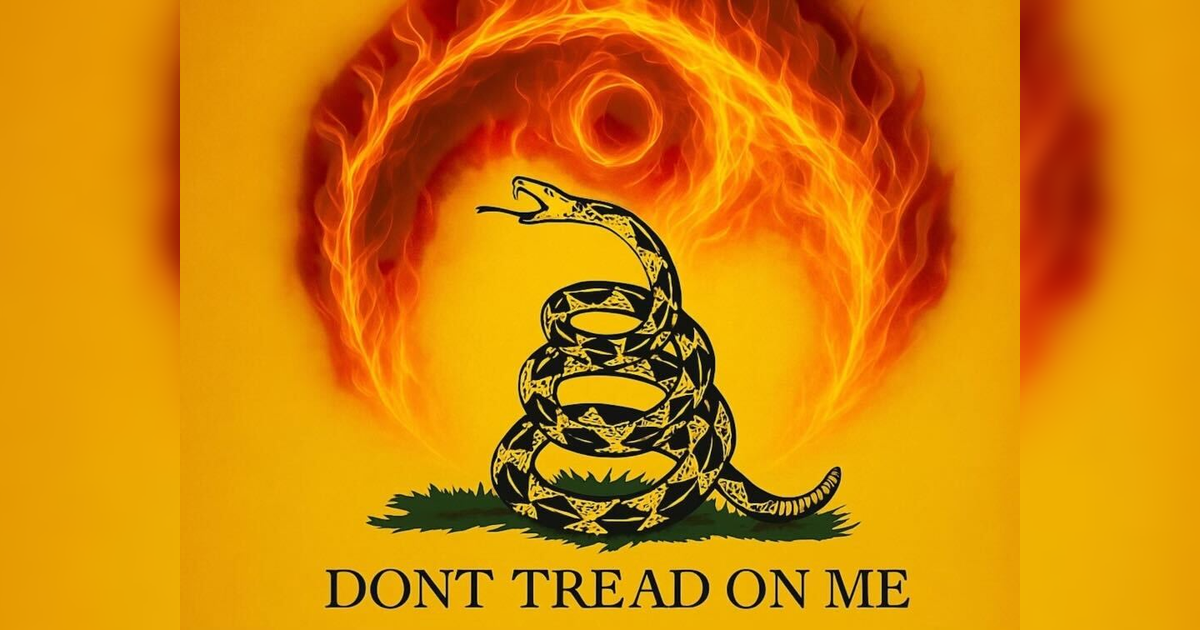
To most people, those two sound incompatible. But not to me. One whispers, “Let go.” The other shouts, “Don’t tread on me.” And somewhere between the silence of the Tao and the fire of rebellion lies a path I’ve come to call home.
Real Freedom Ain’t Pretty: Sovereignty in the Mud
Here’s what the gurus and politicians won’t tell you: freedom isn’t polished. It’s messy, subversive, and raw. It’s the taste of dirt under your nails when you pull your own carrots out of the ground instead of depending on a subsidized system.
Taoism taught me early on that sovereignty starts by owning your own chaos—by becoming the master of your energy, your ego, and your illusions.
Chapter 59 of the Tao Te Ching isn’t about elections or revolutions. Instead, it talks about virtue and the unknown. “Being unknown,” Lao Tzu writes, “one can possess sovereignty.”
That’s real power. Quiet power. Power no one can confiscate, because it doesn’t come with paperwork or a barcode.
Sovereignty in the Wind: Taoist Freedom as Yielding
The Taoist doesn’t grab power. He becomes powerful by vanishing into the flow.
Imagine trying to control the wind only to have it slip through your fingers. But what if you could ride it instead? What if freedom wasn’t about resistance, but resonance?
Taoism teaches that the less we resist the natural course of things, the more freedom we actually feel. Chapter 57 of the Tao Te Ching says it best:
“The more prohibitions you have, the less virtuous people will be. The more weapons you have, the less secure people will be. … Therefore, the Sage says: I take no action, and people are reformed. I enjoy peace and people become honest.”
This is not apathy but mastery. In other words, Lao Tzu’s freedom is not about shattering external chains; it’s about melting internal ones. The Taoist doesn’t need to conquer because he has ceased to be conquerable.
The Libertarian Warrior: Rights Without Rulers
Now pivot to the libertarian. Think Rothbard, Rand, Hayek, Nozick. The libertarian asserts that individual liberty is not granted by the state—it precedes it. Any infringement, even in the name of safety, is an act of violence.
Where Taoism says “Do not grasp,” libertarianism says “Do not coerce.” The difference? One is a soft whisper; the other a rallying cry. But at their root, both philosophies declare: Let people be.
To the libertarian, sovereignty means owning your body, your mind, and the fruits of your labor. It’s “Don’t tread on me” carved into your ethos. But where the Western freedom-fighter often gears up with metaphorical weapons and constitutional amendments, the Taoist sheds even his name.
Wu Wei and the Invisible Handshake
The Taoist principle of wu wei—effortless action—has uncanny parallels to Adam Smith’s invisible hand or Hayek’s spontaneous order. Both are blueprints for a self-regulating world.
Imagine a jazz band with no conductor. Each player listens, adjusts, responds in real-time. No central plan, yet harmony emerges. This is how the Tao functions and how libertarianism envisions free markets and voluntary communities.
Hayek argued that central planners could never match the distributed wisdom of individuals acting in freedom. Lao Tzu would nod in agreement:
“Ruling a large country is like frying a small fish. Too much handling will spoil it.”
Tyrants try to orchestrate. The Tao dances.
Zhuangzi and the Sacred Middle Finger
If Lao Tzu is the gentle river carving through stone, Zhuangzi is the mischievous lightning bolt that fries the entire concept of control.
In one of his parables, Zhuangzi is offered a prestigious government post. He declines, saying he’d rather be a living turtle dragging its tail through the mud than a dead one enshrined in a temple.
That, my friends, is the sacred Taoist middle finger to state authority. The Taoist doesn’t want your throne—he wants his garden.
In libertarian terms, Zhuangzi is the off-grid homesteader, the Bitcoiner rejecting fiat, the punk anarchist growing kale under solar panels. He doesn’t rebel. He vanishes.
Why Both Traditions Distrust the State
At the heart of both Taoism and libertarianism is a visceral mistrust of centralized power.
Lao Tzu saw the state not as protector, but as predator:
“The more laws and restrictions there are, the poorer people become. The more weapons the people have, the more chaos there is in the country.”
Murray Rothbard echoed the sentiment millennia later:
“The State is a gang of thieves writ large.”
The Taoist avoids entanglement. The libertarian challenges the premise. One sidesteps the tiger; the other builds tiger-proof armor. But both know this: when power concentrates, freedom dies.
The Internal vs. External Game of Freedom
Here’s the fascinating twist: libertarianism is mostly an external philosophy that’s concerned with laws, property rights, and institutional checks on power.
Taoism is an internal one. It’s about shedding ego, dissolving desire, and melting into the Tao.
But what if both are needed? What if political freedom without inner clarity is like giving a gun to a child? And spiritual enlightenment without political agency is just peaceful enslavement?
To be truly sovereign, one must master both the outer world of action and the inner world of being.
The Farmer, the Garden, and the Gun
Imagine three neighbors:
- One grows his own food, lives simply, and minds his business. (Taoist Sage)
- Another runs a small business, owns land, and insists no one tax or regulate him. (Libertarian Homesteader)
- The third builds walls, makes laws, and insists the others need his protection. (Statist Bureaucrat)
The first two coexist peacefully. The third keeps trying to control them, claiming it’s for their safety.
Here’s the punchline: The Taoist will never sign a petition. The libertarian might. But both know the true revolution happens when you walk away, either in silence or with a manifesto in hand.
Metaphors of Resistance and Flow
- The Taoist is water—soft, yielding, yet capable of eroding mountains.
- The Libertarian is fire—intense, illuminating, and fiercely independent.
- The State is stone—hard, cold, rigid.
Water seeps into cracks. Fire scorches what does not yield. And over time, both water and fire outlast the stone.
Key Figures: Building Bridges Between Tao and Liberty
Let’s briefly honor some torchbearers who have spotted this philosophical convergence:
- Murray Rothbard called Lao Tzu the “first libertarian.”
- Friedrich Hayek’s theory of spontaneous order mirrors Taoist principles of self-organization.
- Ursula K. Le Guin, in her translation of the Tao Te Ching, argued that anarchists and Taoists “make good friends.”
- Thomas Merton, the Christian contemplative, recognized the Taoist insight of freedom as inward sovereignty.
These thinkers remind us that freedom is both a political condition and a metaphysical realization.
What This Means for Today
We are entering an era of digital surveillance, bio-certification, AI governance, and algorithmic coercion. Politicians speak of freedom while handing out shackles labeled “safety.”
The Taoist and the libertarian both whisper the same antidote: Disengage. Decentralize. Return.
- Learn to garden your mind.
- Barter, build, create outside of systems that demand your soul.
- Practice sovereignty not as aggression, but as alignment.
- Say “no” not with a sword—but with silence, exit, and self-mastery.
The Tao of Voluntaryism
Perhaps the deepest synthesis of Taoism and libertarianism is voluntaryism—the belief that all human interactions should be voluntary and free from coercion. That’s wu wei in practice.
It’s not utopian. It’s not a manifesto. It’s a personal experiment in self-rule.
Just as a river doesn’t ask permission to flow, neither should you.
Just Letting the World Govern Itself
The world, like the Tao, doesn’t need your control. It needs your integrity. Your stillness. Your trust in the natural unfolding.
The Taoist doesn’t vote. The libertarian wants to vote less. But both agree on this: true freedom begins where coercion ends.
So the next time the state knocks on your door with a new program, a new tax, or a new fear-based slogan, remember what Lao Tzu and Rothbard might say in unison:
“Do nothing. Let the world govern itself.”
And maybe, just maybe, it will.