Beta

Password Reset Confirmation

If an account matching the email you entered was found, you will receive an email with a link to reset your password.

Welcome to our Beta

The Advocates of Self-Government is preparing a new experience for our users.

User Not Found

The username/email and password combination you entered was not found. Please try again or contact support.

Skip to main content

Quizzes & Apps

Articles

We Cannot All Be Subsistence Farmers

We Cannot All Be Subsistence Farmers

Tapping into the human superpower

Published in The Freedom Scale – 10 mins – Oct 27

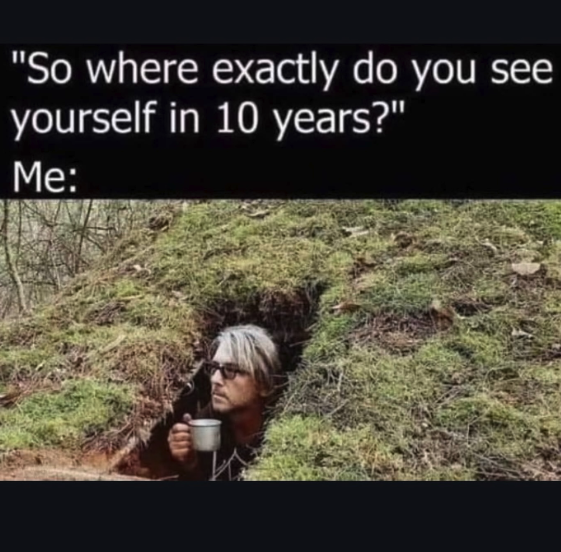
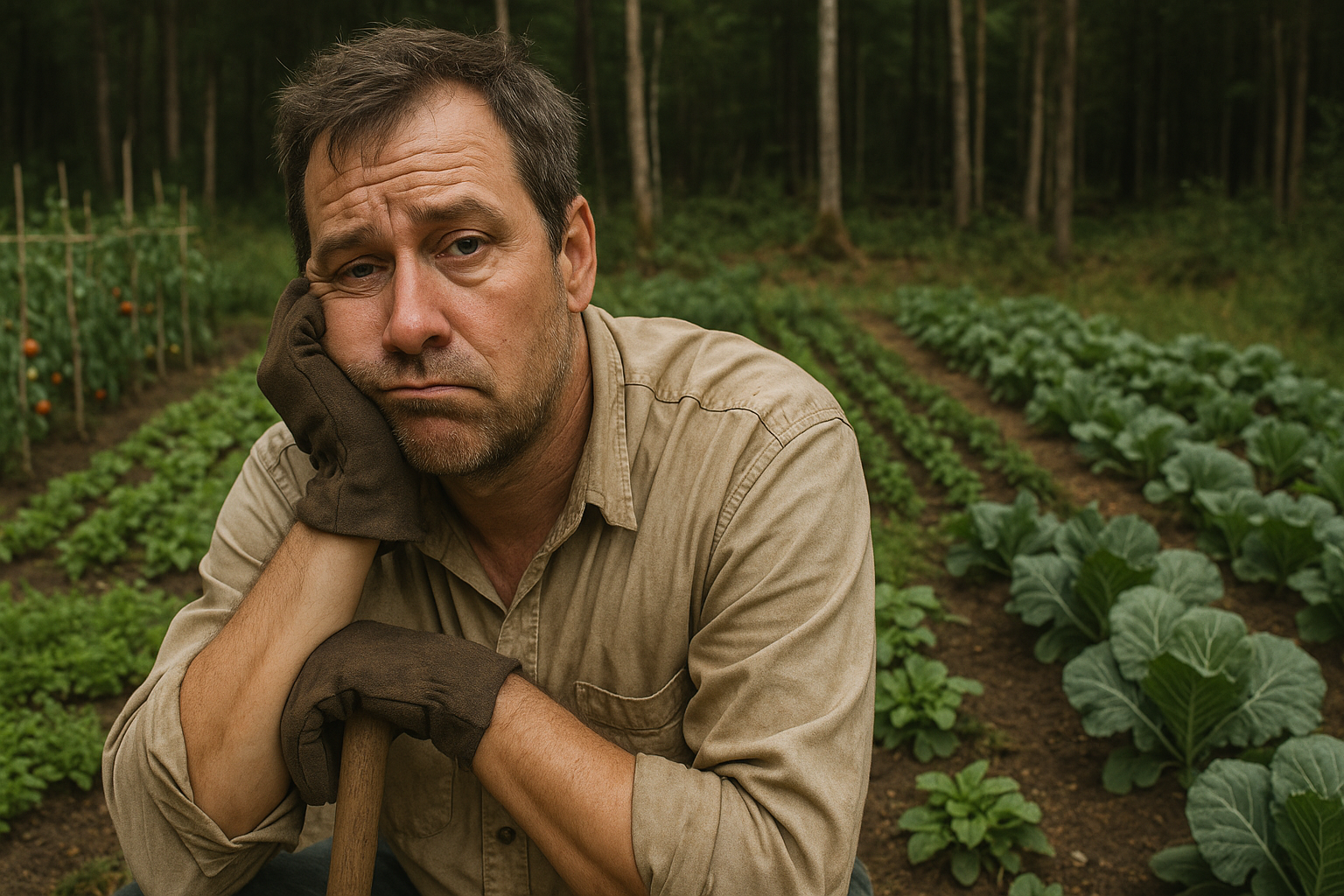
Have you seen memes like these over the last few years?
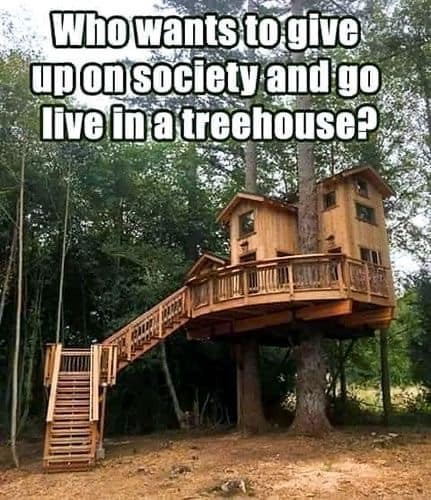

If you are anything like me, you have seen quite a few. You may have also heard related sentiments expressed in conversations. This is especially (though by no means exclusively) the case among people who have an abiding love of, and concern about, individual freedom.

Getting away from it all

Sometimes, the dream is scaled down and temporary: We just want a break. We feel the urge to simplify. All this technology has begun to weigh on us, and we need a “digital detox.” Or a few weeks in a cabin in the woods just sounds nice. (Cabin-in-the-woods memes and reels are everywhere now!)

It is also human nature to worry about the future. We can act on this concern by trying to be prepared for unexpected circumstances and cataclysms. Hence, we get the “prepping” phenomenon. For some, this means storing food and supplies. For others, it means setting up a garden or small farm for increased self-sufficiency.

Some of us are aware of the dangers of bigness: big government, big agriculture, big pharma, big food. This spurs us to seek local alternatives.

All of these impulses make sense.

We know technology is useful, but it also clearly has a dark side, and it all feels like it’s just happening so fast. Too fast. We didn’t evolve for blue light and endorphin cascades and an endless supply of 15-second eye-candy videos.

Even without all that, this modern world can just be a bit…much. We didn’t evolve to work interminable hours at weirdly stressful jobs to pay 20 different utility and service bills, either.

The prepping urge is entirely rational as well. As we have seen, supply chains and civil order are fragile. Do we listen to our normalcy bias and assume all will be well, or do we hedge our bets and plan for the worst? Food, water, ammunition? A defensible redoubt and a supply of off-grid power? A garden and some chickens? A brief study of history shows that anything can happen…including very bad things.

The trend toward localism is also quite rational. It is a good idea to know your neighbors. To know where your food is coming from. To know whom you can count on. And we know for sure that we cannot count on big food, big pharma, or big anything to have our best interests at heart.

Getting away from government

And then there’s government.

Big government. A government whose operations and growth seem entirely beyond our control.

And there are all the other power-players—mega-corporations, billionaire ideologues, central bankers, and Davos megalomaniacs—who use government to impose their agenda on all of us…and profit in the process.

Those of us who value freedom believe that governments are too large and government officials have too much power over our lives. Some of us believe that even the smallest government is too large. And over the last five years, it has become clear that there is little that government officials cannot or will not do. Anything is fair game once they declare an “emergency.”

Is there any wonder that we have an urge to get away from it all?

What’s your political type?

Find out right now by taking The World’s Smallest Political Quiz.

Getting away from other people

The Covid era taught us that government power is a dangerous and often malign force. Sadly, it also taught us that the bulk of people will not resist government overreach when it comes. Worse still, it showed us that many will comply with it, and even deputize themselves as de facto enforcers of it.

As a result, many of us now have a healthy fear not only of government but also of the general public.

All of these thoughts lead a lot of us to fantasize about putting a physical buffer zone between ourselves and…everything.

Individualistic individuals

This is even further enhanced by certain personality tendencies. Acknowledging, of course, that these are generalizations…

People who are more concerned with freedom tend to be more individualistic by nature, and more skeptical of collectivism. We love our friends, and some of us are even quite social, but we are more likely to be wary of large groups and humanity as a whole. (Contrast this with avatars of collectivism such as Marx and Rousseau, who hated individuals but loved “the people” as an abstract concept.)

Freedom lovers are also more likely to have an internal rather than an external locus of control—to feel that we are masters of our own destiny rather than victims of circumstance. As such, we are more likely to focus on, and even take pride in, self-reliance.

The result is a more pronounced independent streak—one which makes the thought of getting away from it all even more alluring.

Subsistence-based isolation doesn’t work

Our reaction to these circumstances is understandable, both emotionally and logistically. Gaining a greater degree of self-sufficiency is a good idea. (I myself am currently looking for a more rural piece of land, and I already have a decent stock of food.)

That being said, I am also hearing some unrealistic notions creep into our discourse. In essence, some people have begun to suggest that the solution to our problems is for us all to become the modern equivalent of subsistence farmers. And that notion does need a little splash of cold water.

Solitary farming and off-grid living are quite challenging, and the closer one gets to actual subsistence farming, the closer one gets to Hobbes’ nightmare of an existence that is nasty, solitary, and short. At its ultimate extreme, a genuinely independent, subsistence-level existence puts one in the Stone Age.

I am not strawmanning—I know most of you do not expect to start fabricating your own tools and clothing from stone and hide. But we do need a reality check on the impulse to get away from absolutely everyone and everything.

Life in isolation is, for all intents and purposes, impossible. We are, by nature, an ultra-social species. We choose to be with others. We want to be with others. We are biologically wired this way.

The economic realities are just as inescapable. We are interdependent by design. Separated from others and fully left to our own devices, each of us can eke out only the most primitive and precarious existence.

Thomas Paine described it well in 1776:

“If we suppose a small number of persons settled in some sequestered part of the earth, unconnected with the rest, they would represent the first peopling of any country, or of the world. In this state of natural liberty, society would be their first thought. A thousand motives will excite them thereto; the strength of one man is so unequal to his wants, and his mind so unfitted for perpetual solitude, that he is soon obliged to seek assistance and relief of another, who in his turn requires the same. Four or five united would be able to raise a tolerable dwelling in the midst of a wilderness, but one man might labour out the common period of life without accomplishing any thing; when he had felled his timber he could not remove it, nor erect it after it was removed; hunger in the mean time would urge him from his work, and every different want call him a different way. Disease, nay even misfortune, would be death; for though neither might be mortal, yet either would disable him from living, and reduce him to a state in which he might rather be said to perish than to die.”

In our disgust with the modern world—the surveillance, the compliance, the slow slouch into soft totalitarianism—we feel compelled to escape, simplify, and isolate.

But, in the midst of all we have accomplished as a species, it is easy to forget, and to take for granted, a simple reality:

Cooperation is the human superpower!

Prior to the advent of economic specialization, we were primitive and grindingly poor. Specialization set us free.

A brilliant illustration of our economic interdependence was provided by a man who spent six months and $1500 to make a single chicken sandwich from scratch. He grew the vegetables; made the salt from seawater; milked a cow; extracted rennet from stinging nettle and made the cheese; harvested and ground the wheat; collected honey; made butter; made bread; killed and cooked the chicken; and assembled his sandwich. (A sandwich that, after all that effort, he said was not especially good.)

Of course, if you pay attention during the video, you will notice that in the process of making his one mediocre sandwich, he also used dozens of tools that were not of his creation. Things made of wood and metal and plastic. Things that were designed and fabricated by others, from resources that had to be extracted and transported by others. He also flew on an airplane to get the seawater and presumably stayed in a hotel while making the salt.

If he had tried to create every tool and extract every resource himself, truly from scratch, he would have spent a lifetime and still not succeeded. And that is to say nothing of the knowledge he would have to acquire in order to execute each activity. (He had to consult with many experts during the process.)

Something as simple as a chicken sandwich (or, in Leonard Reed’s famous example, a pencil) requires the input and cooperation of tens of thousands of people. People who have never met. People in far-flung corners of the world.

We will need to rely on each other

Even if you were to decide to set yourself up with a small farm to increase your personal self-sufficiency, you would still be dependent upon the economic activities of hundreds of thousands of people. Hammers, nails, glue. Chicken feed, shingles, oil. Solar panels and ammunition. Medical supplies and precious antibiotics.

Lumber isn’t just lumber. It’s the tools that the lumberjacks used, the gasoline that powered the tools, the rubber in the tires of the trucks that transported it, the ships used to transport the rubber, the pancakes the waitresses served to the truckers, the ink and paper in the receipts they handed the truckers, the pens the truckers used to sign the receipts, and the materials, design, and fabrication of every tool along the way…

We could do this all day. It’s all interconnected. The closer you get to economic autarky, the closer you get to stone knives and bearskins. That isn’t going to work.

Being prepared is an excellent idea. I admire (and perhaps even envy) the readiness of hardcore preppers.

Starting a farm, whether it be a small hobby farm or a serious operation, is an excellent idea.

Moving away from big cities can be beneficial—for one’s personal safety and emotional well-being.

I am not criticizing any of these activities or impulses. I am only offering a corrective to the notion that total personal autarky is the way to go. It isn’t.

A greater degree of escape from the system makes sense. But that doesn’t mean isolation—it means we build new kinds of networks. New connections. More local, more decentralized, yes. More atomized…no.

We need trading partners. We need friends. We need allies. We need people we can count on in the storm.

As the clouds slowly rumble in, it’s easy to feel like we’re all alone. But we’re not. So let’s start building our future together, rather than riding it out in our separate mountain redoubts. At very least, let’s invite each other to coffee in those redoubts and talk about how we can help each other.

Maybe the true cabin in the woods isn’t one built of timber and solitude, but of trust, reciprocity, and shared strength.


Questions? Input? Concerns? Feel free to email me at chriscook@theadvocates.org

Christopher Cook is a writer, author, and passionate advocate for the freedom of the individual. He is an editor-at-large for Advocates for Self-Government, and his work can be found at christophercook.substack.com.

What do you think?

Did you find this article persuasive?

Unpersuasive
Neutral
Very Persuasive

Subscribe & Start Learning

What’s your political type? Find out right now by taking The World’s Smallest Political Quiz.