



Money is one of the most loved and hated inventions in human history. It can build hospitals or start wars. It can save lives or shatter communities. But at its core, money is simply a mirror—it reflects who we are and what we value.
We frequently speak of money as if it is bad, but in its basic form, it represents a huge portion of human activity. It represents survival.
Indeed, in its basic form, it is a good thing.
Money Is Human Action
You are standing on a ball of rock orbiting a giant ball of hot gas. As balls of rock go, ours is quite nice. It provides everything you need to survive and thrive. But it doesn’t just hand it to you. You must think, choose, and act toward your own survival. And if you fail to do so, that ball of rock isn’t going to step in and save you. So you do the things of survival. You find the food. You build the shelter. You make the tools. And you barter with others who are doing the same. But eventually you discover that barter gets complicated when you make shelters for a living and all you want is a single egg from the chicken guy. Money—an agreed-upon means of exchange—solves this problem (and several others). Money, in its basic form, represents human labor and ingenuity. It facilitates survival. It facilitates thriving. It is good. So why does it feel so evil?The Persuader and the Coercer
In addition to its other merits, money also represents human cooperation and peace. It allows a person to say, Hey, instead of taking that thing from you by force, how about I trade you something for it? That too makes money a good thing. The money he trades for the thing he wants represents something productive he did in the past. He provided labor, ideas, goods, or services to someone else who gave him money for it. Then he gives that money for the thing he wants. Except…not so fast. Not everyone gets their money that way. Some steal it. Some use trickery to obtain it. Some have a lot of it already, and use the power that accompanies wealth to extract even more of it—sometimes in ways that aren’t entirely ethical. Money gets you things you need in order to survive and thrive. But there are, in essence, two ways to get that money: persuasion or coercion. You can create something that other people value and then peacefully persuade those others to give you something you want in exchange. Or you can use force or trickery to extract money and other things of value. Make or take. Trade or extract. Most exchanges of money are persuasive. The vast majority of private exchanges are peaceful, positive, and win-win. And yet, because of our natural revulsion toward bad behavior, and our innate negativity bias, we feel the immoral extractions of money far more keenly.The Gini Coefficient
Social science now has fairly definitive evidence that human beings have an deep, innate, evolved distaste for inequality. When someone has more—especially a lot more—it can have a visceral effect on others. People tend to feel the gap quite keenly. This leads to charges of “greed” and cries of “how much does one person need?” And maybe the rich person is question really is greedy or money-obsessed. Those are unattractive traits, to be sure. Yet, if the rich person used persuasion—if he got rich by providing things that people want, without using force—then has he really done anything bad, no matter how much he has? Who is the truly greedy—the person who works for what he has, or the person who envies what another has and takes it?Crony Capitalism
Sadly, some fabulously wealthy people have used a kind of force. Governments give favored and connected businesses a leg up over everyone else. Tax exemptions. Grants, loans, and bailouts at taxpayer expense. Laws that protect them from competition or give them special status. Laws that force people to buy their products. And much more. All of these come with the threat of force implicit in everything a governments does. Whenever a business is given a favor, someone else pays. Money is taken (by force) from one and given for the exclusive use of another. Laws are imposed upon one in order to benefit another. We find this distasteful, and rightly so.The Pareto Problem
The Pareto Distribution is a fact of life. In many areas of human endeavor, a small number of people have more. More fame. More followers. More talent. More money. And a tiny number will have A LOT more. The phenomenon is self-reinforcing. Talent produces followers and fans. This leads to fame, which creates more fans. Fans spread the word and this brings in more fans. The whole thing snowballs and you end up with a tiny number of people being super-famous, a small number being sorta-kinda famous, and then…everyone else.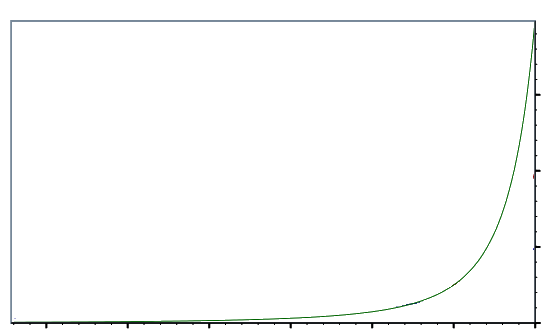
The same thing happens with money. If you have enough money, you can use that money to make investments to grow more money. And more and more. The phenomenon is geometric. The rich really do get richer. People talk about the 1 percent and the 99 percent, but the geometric progression is such that most of the wealth isn’t held by the 1 percent, it is held by the .01 percent.
This is a species-wide problem, and we don’t know how to deal with it. Indeed, there appears to be no way to deal with it without massively restricting freedom. People are unequal in talents, drive, and natural endowments. Some are going to get richer, more famous, more airplay, more fans—and then the Pareto phenomenon is going to raise a tiny portion of that number to unimaginable heights.
Short of some sort of Harrison Bergeron scenario, there is not much we can do about this, other than using increasing violence to equalize outcomes. But as history has shown, this cannot be done. Because of the natural differences in people, the leveling can never be accomplished—so the violence becomes a “boot stamping on a human face forever.”